You already know that online clothing sales live and die by the images you show. When shoppers can’t touch fabric, try on sizes, or turn a garment around in their hands, your photography must step in and do that job. That’s where the Ghost Mannequin Effect in Fashion Photo Editing becomes indispensable: it presents clothes with life-like form and depth while keeping the focus squarely on the product. Below, I’ll walk you through what the Ghost Mannequin effect is, how it’s created, why it works so well for e-commerce, and practical tips to achieve professional results.
I’ll also explain when to use ghost mannequin photography versus other methods, and how we at Plexail can help you scale this work without losing quality.
So, What Is the Ghost Mannequin Effect, Really?
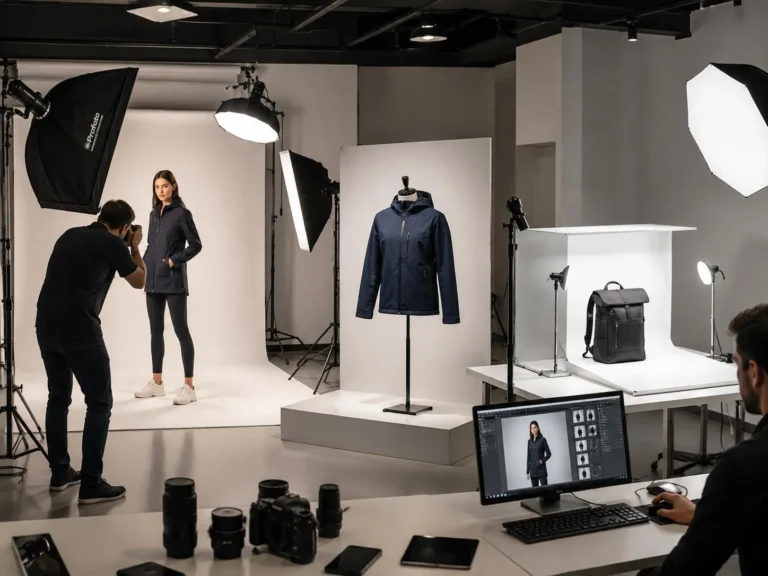
The Ghost Mannequin Effect in Fashion Photo Editing is a technique that makes garments appear to float in three dimensions with no visible model or mannequin. Photographers fit garments on a mannequin (or sometimes a model) and shoot multiple images, usually an exterior shot and one or more interior-detail shots.
In post-production, the mannequin is removed, and hidden interior areas like collars, necklines, and linings are reconstructed so the garment retains its natural shape. The final result looks like an invisible person is wearing the item: it shows structure, drape, and fit without distracting elements.
Creating Ghost Mannequin Images at Plexail with a simple workflow
-
We use a proven workflow to ensure every image looks polished, consistent, and ready for your store.
- Shoot with intention: We advise photographing garments on a mannequin with removable neck and shoulders. Our teams capture exterior shots (front or three-quarter) plus interior detail shots like necklines, linings, and cuffs, so we have the references needed for perfect reconstruction.
- Remove and rebuild: In post-production, we remove the mannequin very carefully and then composite inner shots to rebuild hidden areas such as collars and necklines. This step restores continuity, so seams and fabric patterns match naturally.
- Add depth and polish: We recreate subtle shadows and highlights so the garment reads as three-dimensional. Finally, we correct color, preserve texture, and export files sized and formatted for your marketplace.
Every step affects buyer confidence. When we get these details right, your product pages convert better.
Why does this method outperform flat lays and many model images?
Flat lays are fast, but flatten the garment’s silhouette. Model photography adds human context but brings variability: different models, different poses, different lighting. Ghost mannequin images strike a balance. They show how a garment drapes and where seams fall while keeping every SKU consistent across your catalog. For customers comparing items quickly, that visual stability speeds decision-making and reduces doubt.
What makes a great ghost mannequin photograph with Effects
-
A few technical choices drastically improve the final output:
- Use a mannequin with removable parts. It makes interior shots cleaner and reconstruction simpler.
- Keep camera height, lens, and framing consistent across a product line. Uniform framing reduces retouch time and improves visual cohesion.
- Light softly and evenly. Harsh shadows create editing headaches; soft light preserves texture while making masks simpler.
- Capture interior details clearly. Collars, linings, and sleeve interiors are essential reference material for masking and compositing.
We give every client a short shoot guide, so your incoming files match our template, which speeds delivery and keeps costs predictable.
The retouching that changes perceptions
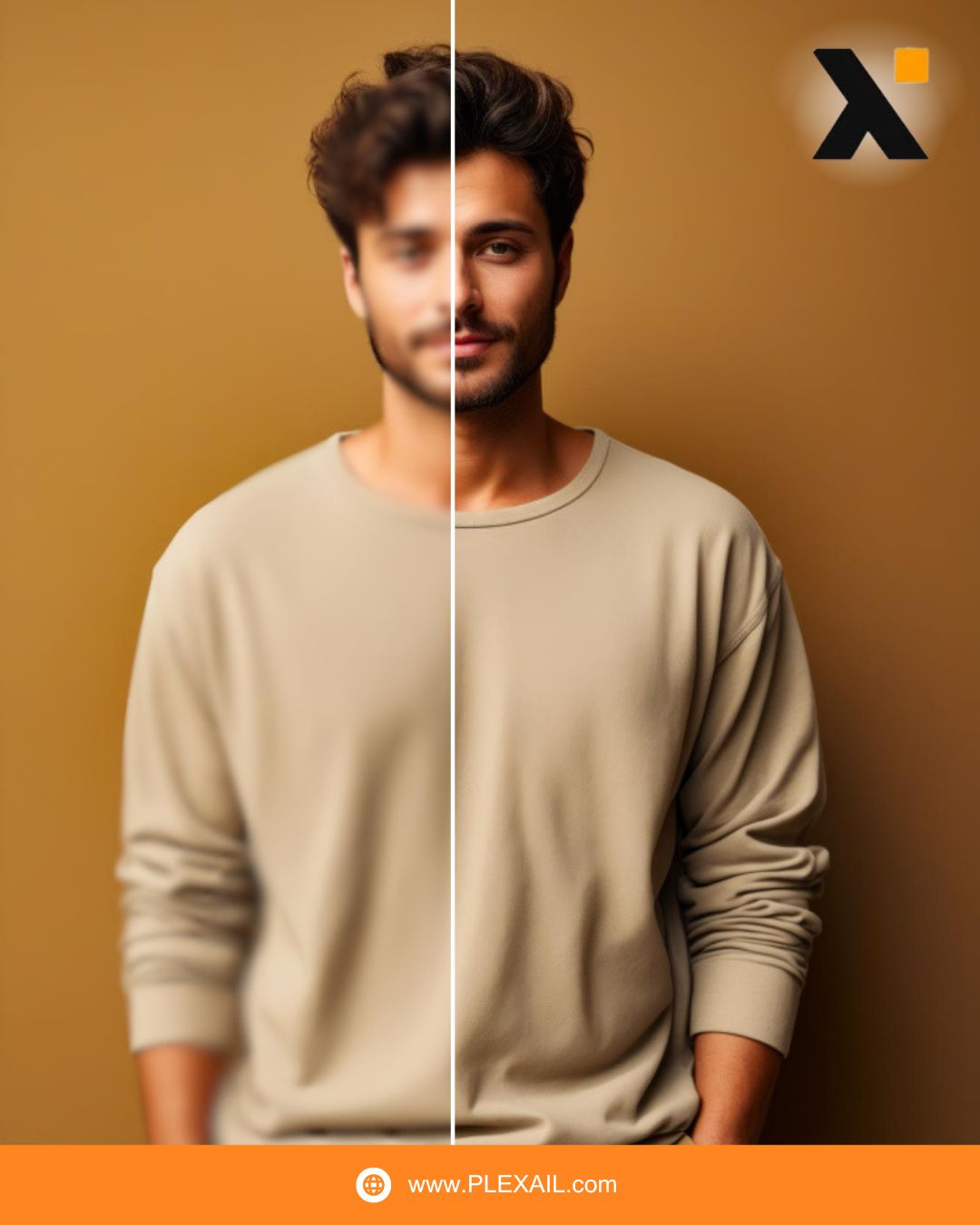
- Removing a mannequin is only the start. Our retouching specialists focus on three things that shoppers notice instinctively:
- Edge fidelity. We mask fabric edges precisely so delicate lace, thin straps, or textured hems remain crisp.
- Seamless reconstruction. We composite interior shots to rebuild necklines and shoulders without visible joins.
- Natural shadows. Depth comes from carefully placed shadows and highlights; without them, garments look pasted on a background.
Preserving accurate color and fabric texture is one of our non-negotiables. If the image loses the material’s character, customers won’t trust what they see.
How ghost mannequin images impact sales and returns
Clear product imagery reduces uncertainty. When shoppers can see how a collar sits, how a shoulder seam aligns, and how the hem falls, they make faster purchasing decisions and return fewer items. We’ve seen brands improve add-to-cart rates and lower returns simply by standardizing to professional ghost mannequin images. That kind of impact quickly pays for itself.
Scaling with Plexail: templates, batching, and speed
When you’re listing tens or hundreds of SKUs (stock keeping units), you need a repeatable pipeline. We set up shoot templates, naming conventions, and batch retouching workflows so your catalog moves from shoot to store with minimal friction. Our combined approach, automation for routine tasks and human retouching for final quality, lets us process large volumes while maintaining the detail buyers expect.
If you’d rather have us edit your catalog than struggle with in-house retouching, we’re here to take that load off. At Plexail, we handle the Ghost Mannequin Effect in Fashion Photo Editing from start to finish: we advise on shoots, perform meticulous retouching, and deliver files that are ready to upload to any marketplace. Send a small sample batch, and we’ll return finished images you can publish straight away.
Interested in a quote? Visit Plexail or call us at +91 9819259097. Tell us about your catalog and your timeline, and we’ll propose a workflow that reduces your workload and improves your conversion rates or sales.