Key Takeaways
- Wedding photo editing covers color correction, exposure adjustment, blemish removal, and detail enhancement, not just a single filter applied across every image.
- Consistency across an entire gallery matters, since a wedding is shot across drastically different lighting: outdoor ceremony, indoor reception, evening light.
- Editing style should match a couple’s actual aesthetic (vintage, contemporary, classic), which is why clear communication between photographer and editor matters as much as technical skill.
- The best wedding editing helps arrange and enhance photos in a way that tells the actual story of the day, not just individually polished images.
What Wedding Photo Editing Really Involves
Wedding photo editing is about making your photos look the way that day actually felt. Lighting changes a lot between a sunny outdoor ceremony and a dim reception hall, so editors fix the colors to keep skin tones true and balance brightness from one scene to the next. They also tidy up small distractions, like a stray exit sign or a stubborn blemish, without touching the real moments: the happy tears, the laughing, the quiet glances.
Why Professional Editing Matters for a One-Time Event
A wedding can’t be reshot. That single fact is what makes professional editing worth the investment: a skilled editor knows how to correct technical issues (a slightly underexposed vow shot, an odd color cast from venue lighting) while preserving exactly what made the moment worth capturing in the first place. This balance, technical correction without losing authenticity, is harder than it looks and is where experience genuinely shows.Creating a Cohesive, Dreamy Atmosphere
Editing can add warmth and romance to a gallery through careful color grading choices, without pushing so far into stylization that photos stop looking like real moments. A subtle, warm grade across an entire gallery creates a cohesive emotional tone that a technically correct but unedited gallery often lacks.Perfecting Portraits Without Losing Authenticity
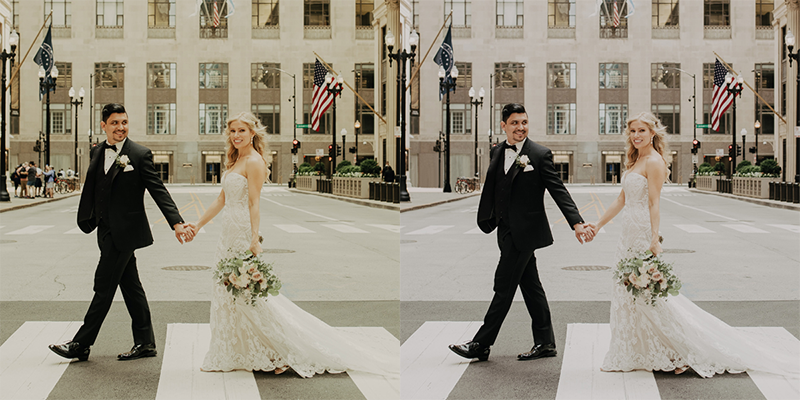
When we retouch portraits of a bride and groom, the goal is simple: they should still look like themselves. We even out skin tones, clear a blemish that happened to show up that morning, and soften any harsh shadows that make a face look tired. That’s about it. You’re not getting a different person. You’re getting the best version of how they really looked that day, the one their families would recognize in a heartbeat.
Preserving the Small Details That Matter
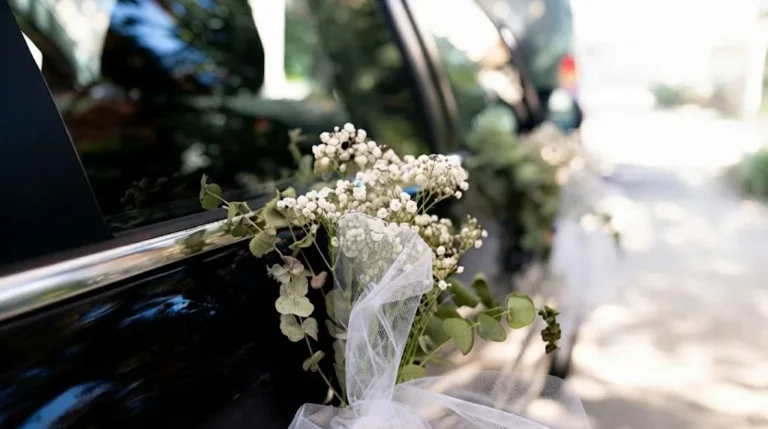
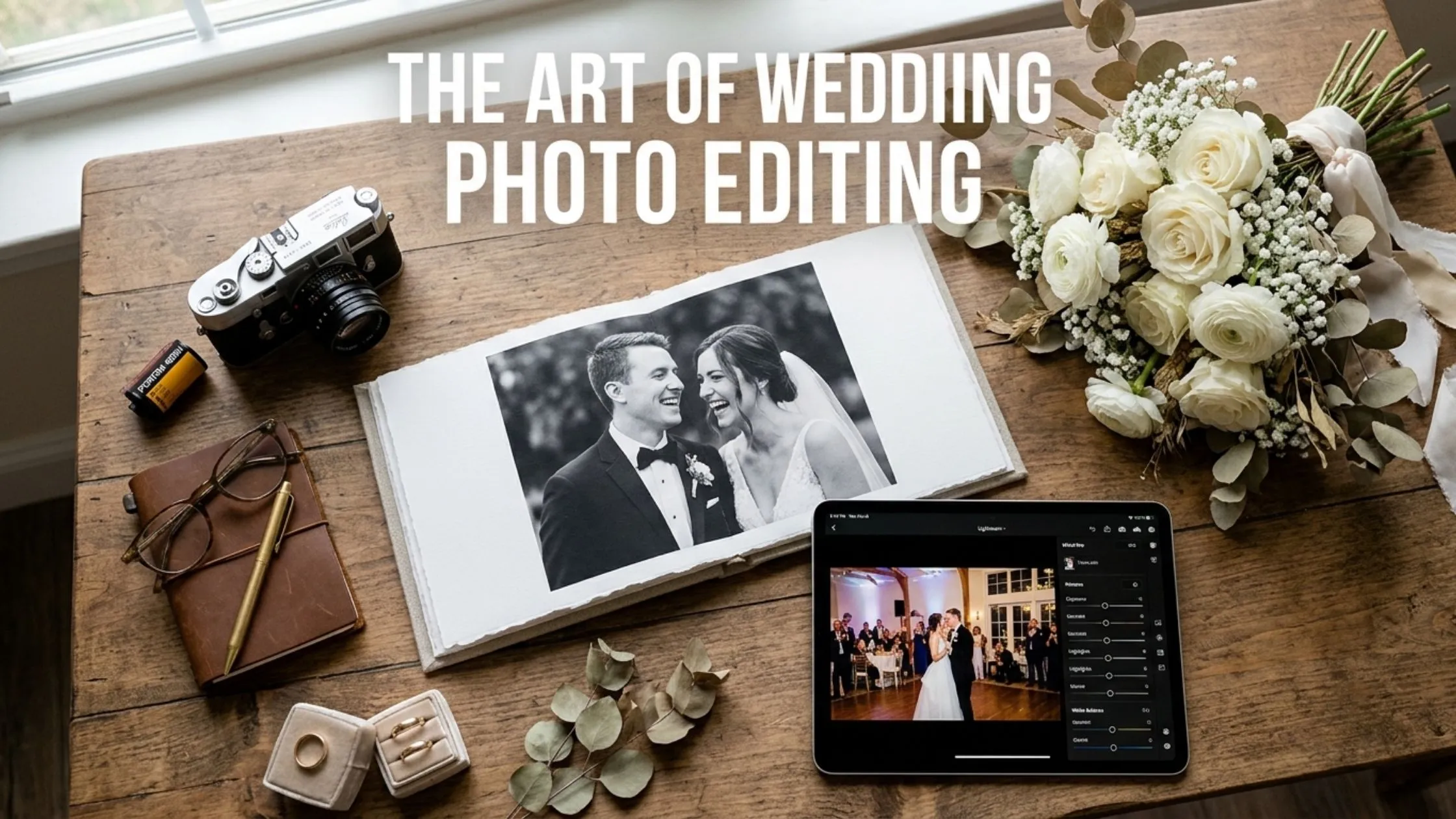
Rings, floral arrangements, table settings, and other small details often carry outsized emotional weight in a wedding album. Editing the little details, like the way light catches a ring or the soft layers of a bouquet, makes the whole album feel richer.Creating a Story Through Thoughtful Editing
Beyond individual image quality, skilled editing includes selecting photos and arranging them to tell the story, from getting-ready shots through the ceremony, reception, and final send-off. A gallery arranged with intention reads as a story. That same selection and ordering is the foundation of creating a wedding photo album that feels like one narrative. A gallery of individually great but randomly ordered photos doesn’t carry the same weight.Matching Editing Style to Photography Style
Wedding editing should adapt to the photography style it’s working with, whether vintage and film-inspired, bright and contemporary, or moody and cinematic. This is where clear communication between the couple, photographer, and editor truly matters: reference images and communication regarding preferences produce far better results than guessing at style after the fact. Our guide to questions to ask a wedding photographer covers what to settle before the shoot.