Key Takeaways
- Photography is easy to learn; after a few weeks of practice, most photographers feel comfortable shooting listings.
- Startup costs are fairly manageable, usually ranging from $800 to $2,500, depending on whether you already have a camera body.
- It is very important to build a relationship with agents and brokerages, as you can get more rebookings by building a strong connection.
- Real estate photography is consistent work because listings never stop, and homes sell year-round.
- Depending on the area and the package, prices vary; it is advisable to do some research on the going rates in your area before quoting prices to clients.
Are you someone who is also interested in becoming a real estate photographer? The good news is that the path is quick plus simple. First thing is the passion and willingness to learn more and more. You must be both creative and consistent. Creativity, for example, here means being able to shoot a room or an area in a way that it looks larger and more attractive. Plus, invest in a handful of tools and build a portfolio. Also, begin reaching out to agents in your area.
Overall, building a clientele is a demanding, multi-faceted process which requires both photographic expertise and marketing savvy. This guide will discuss the key skills required, the necessary equipment, portfolio development, prices, and projected earnings in detail.
What Does a Real Estate Photographer Do?
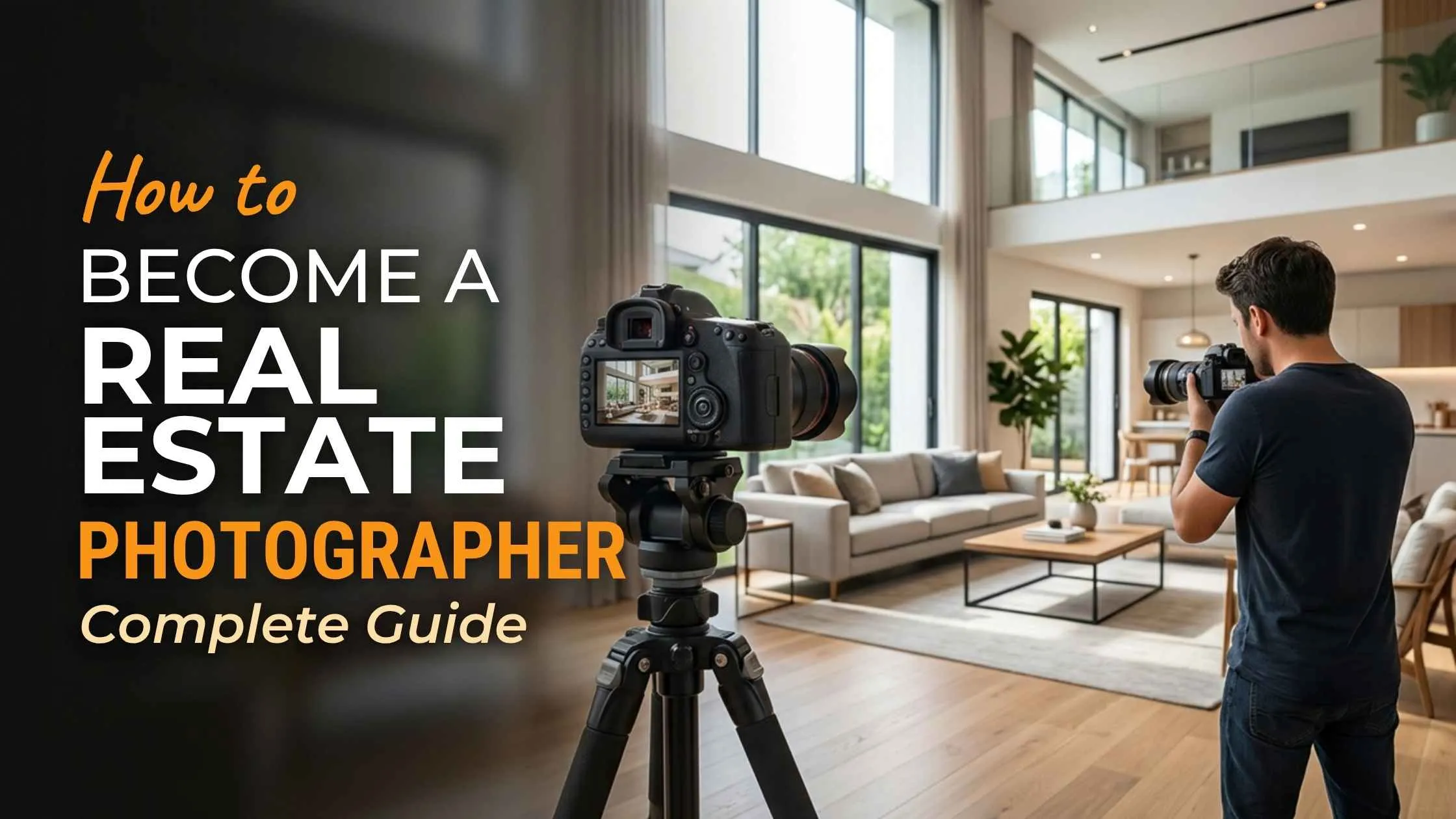
A real estate photographer can be considered successful in his work if he manages to show the house in such a way that it will look the most attractive for sale. This includes several factors:
- Getting inside pictures of all rooms in spacious compositions
- Getting outside shots during golden hour (often photographers work early in the morning or late in the evening to get favorable lighting)
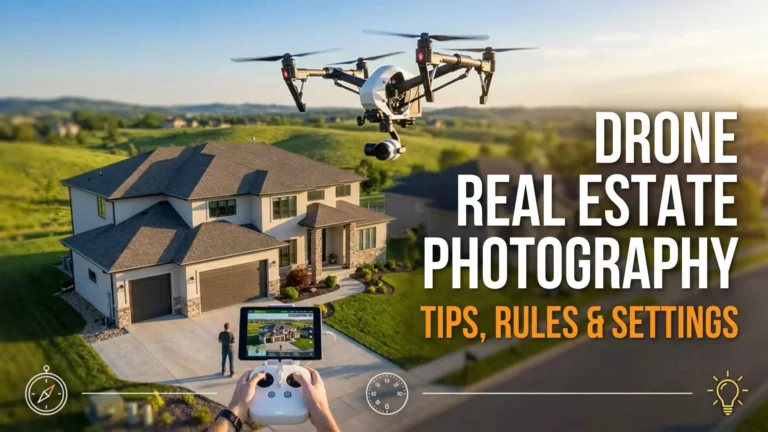
- Optionally, shooting with a drone is also available if the customer wants to get images of the house from above
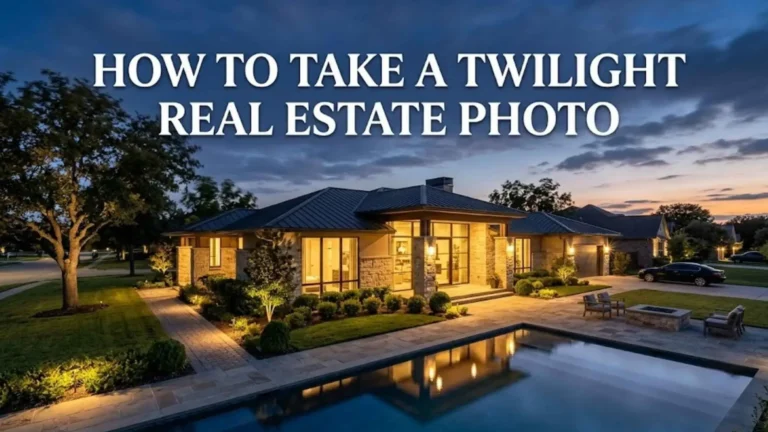
- Occasionally, shooting twilight photos, where the exterior is captured at dusk with interior lights glowing
- Moreover, the photographer must return the edited images as soon as possible, often within 24–48 hours
Skills You Need to Learn
To get repeat business, you need to learn specific skills like:
- Exposure control
- Composition for rooms
- Flash and HDR techniques
- Lens choice
Another important note: being fast and consistent is often more important than being creative and artistic.
Gear to Get Started
You don’t need the most expensive gear to get started; you just need equipment that suits the job.| Item | Starter Kit (800–1,200) | Pro Kit (2,000–3,500) |
|---|---|---|
| Camera body | Entry-level mirrorless/DSLR | Full-frame mirrorless |
| Lens | 16-35mm f/4 (used or budget) | 16-35mm f/2.8 |
| Tripod | Basic aluminium tripod | Carbon fiber quick-release plate |
| Lighting | Single off-camera flash | Two-light flash kit + triggers |
| Editing software | Lightroom (subscription) | Lightroom + Photoshop + HDR plugin |
Build a Real Estate Portfolio
No agent is going to hire a person with nothing to show, so the first thing you should do is to create proof of skill, even before you have paying clients.
- Shoot your own home or a friend or relative’s house as practice and to create a portfolio
- Shoot for free or at a deep discount for a few local homeowners or small agents in exchange for using their images in your portfolio
- Stage rooms thoughtfully before shooting; decluttered, well-lit spaces photograph far better than lived-in ones
- Host your portfolio somewhere clean and simple; a basic website, a Behance page, or even a well-organised Instagram grid works to start
- When presenting your portfolio to agents, keep it tight. Ten to fifteen strong images of a few properties will land better than fifty mediocre ones.