Key Takeaways
- Over-filtering is the most common mistake, a heavy-handed filter can shift your dress color or skin tone in ways you won’t notice until you’re looking at prints.
- Small details (lace, table settings, rings) deserve the same editing attention as the big moments, they’re what make an album feel complete, not repetitive.
- Starting editing soon after the wedding, while colors and details are fresh in the editor’s memory, produces better results than letting files sit for months.
1. Going Overboard with Filters
A trendy filter can look great in isolation and wrong on your actual photos, the most common issue is a filter shifting white fabric (your dress, table linens) toward a color it was never meant to be. A skilled editor enhances color and light without pushing the whole image toward one filtered mood. If you see test edits before the full batch, check specifically whether whites still read as white.2. Forgetting the Small Details
The kiss and the first dance get the obvious attention, but the lace on your dress, the flower arrangements, the table settings, and the small candid moments are what make a wedding album feel complete rather than repetitive. Ask your editor directly whether detail shots get the same care as the big moments, or whether they’re an afterthought.
3. Waiting Too Long to Start Editing
Colors fade from memory the same way they can fade in unedited files sitting untouched for months. Editors who start soon after the wedding (while the day’s actual lighting and mood are fresh) tend to produce results that feel truer to how the day actually looked and felt.4. Choosing Price Over Quality
The cheapest option is rarely the best value here, specifically because wedding photos are one of the few purchases you’ll revisit for decades. Over-edited or inconsistent results from a rushed, underpriced service are a common outcome. Ask to see a full gallery sample, not just a few cherry-picked images, before committing.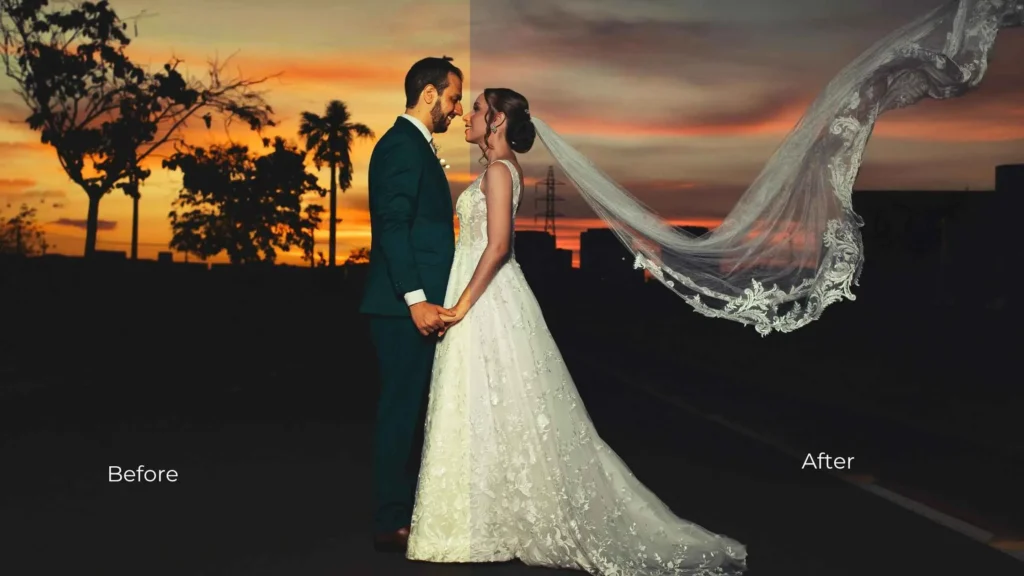
5. Not Communicating Your Style
Soft and romantic, bright and colorful, moody and cinematic, every couple has a preference, and an editor can’t guess it. Bring reference images and be specific about tone before editing starts, not after you’ve seen a first draft you don’t like.6. Over-Retouching People
Light photo retouching (removing a temporary blemish, smoothing a stray hair) is normal. Over-retouching (smoothing skin texture until people don’t look like themselves) is the mistake that ages worst, since it’s the one you’ll notice more, not less, as years pass. A good editor enhances without erasing who someone actually is.
7. Ignoring Consistency Across the Full Gallery
A wedding is shot across hours, sometimes across an outdoor ceremony, an indoor reception, and low evening light. Each of these lighting conditions edits differently, and it’s easy for a gallery to end up looking like three separate photo shoots rather than one cohesive story. Ask your editor how they use color correction to maintain a consistent color and tone across a gallery shot in multiple lighting conditions, not just within a single scene.
8. Not Asking About File Delivery and Backup
Wedding photos are irreplaceable, so it’s worth confirming upfront how your files will be delivered and whether the editor keeps a backup copy for a reasonable window after delivery. This matters less for the editing quality itself and more for peace of mind: a lost or corrupted delivery on a one-time event is a genuinely stressful problem to have.What Good Wedding Photo Editing Actually Looks Like
The best wedding photo editing tends to be the kind you don’t consciously notice. Colors read true to how the day actually looked, skin looks like skin, and the emotional peaks of the day (the first look, the vows, the last dance) carry the same weight they had in person. If an edited gallery makes you think about the editing itself, whether that’s an overly aggressive filter or visibly over-smoothed skin, that’s usually a sign something went too far in one direction.