Key Takeaways
- Jewelry photos need to convey true color, detail, and sparkle accurately, information a shopper would otherwise get by handling the piece.
- Good retouching changes how valuable a piece feels. When photos look flat, patchy, or messy, even beautifully made jewelry ends up looking ordinary.
- Consistency across a full collection matters as much as individual photo quality for how a jewelry brand’s shop presents as a whole.
- Outsourcing this work frees jewelers to focus on design and inventory rather than hours of manual photo correction.
Why Jewelry Photos Carry More Weight Than Most Product Categories
Jewelry is a category where small visual details like a stone’s clarity, a metal’s true tone, and the precision of a setting directly influence a buying decision. Unlike many other products, shoppers are evaluating craftsmanship and material quality almost entirely through the photo, with none of the tactile confirmation a showroom visit would provide. This makes accuracy and clarity in jewelry photography higher stakes than in most other retail categories.What Retouching Actually Fixes
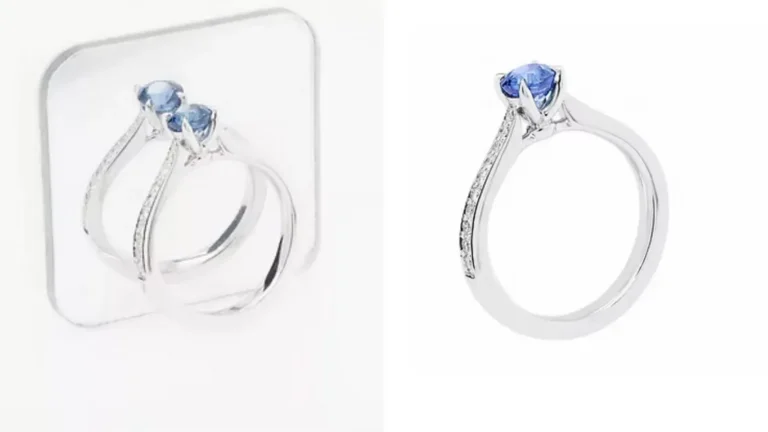
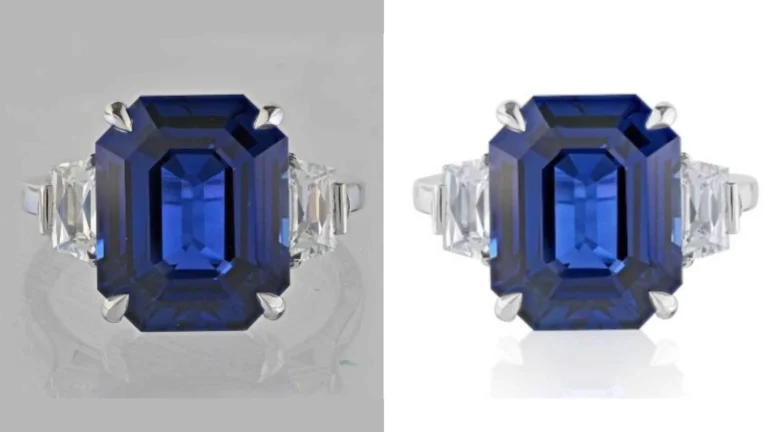
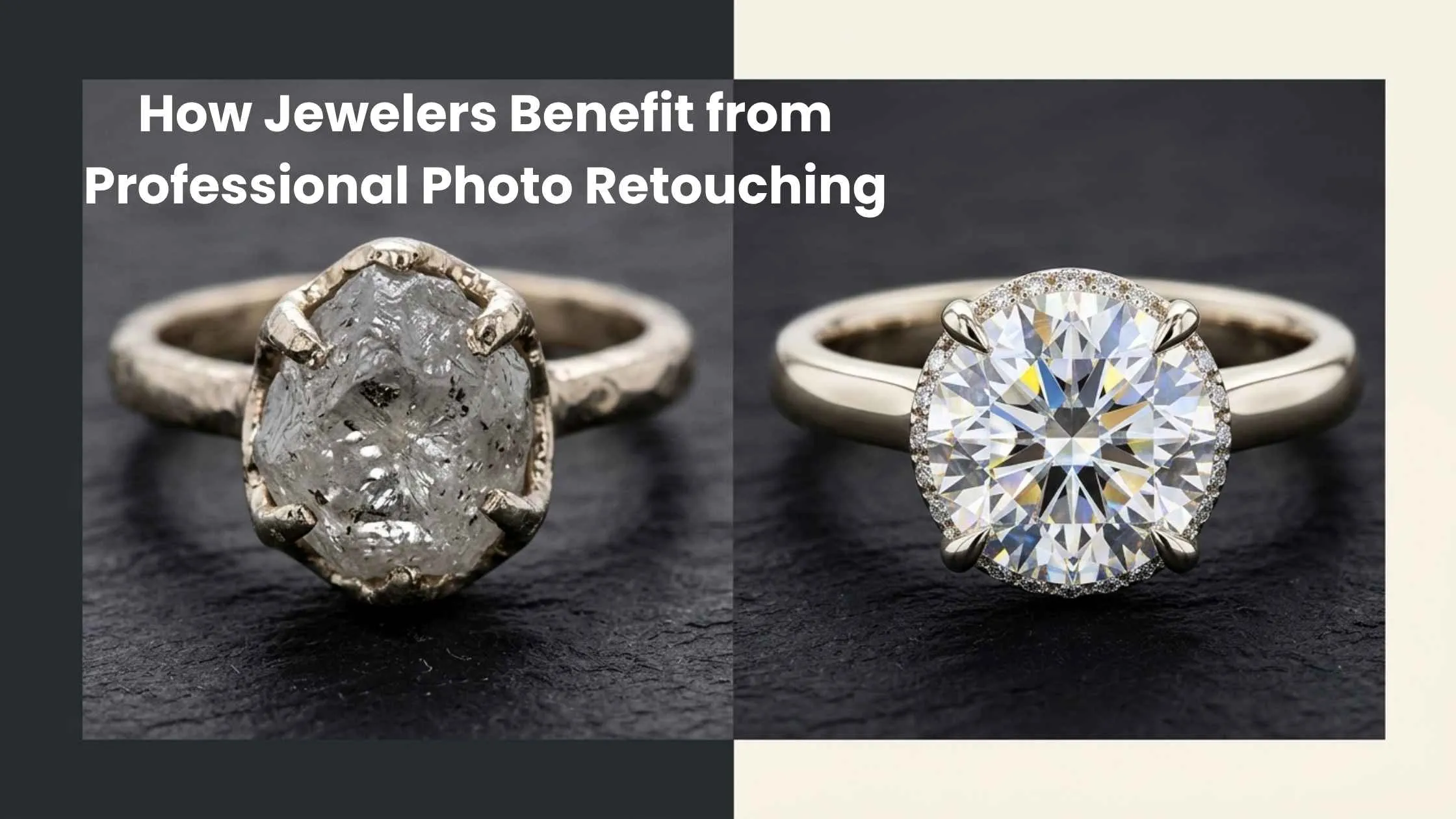
Raw jewelry photos commonly show dust, fingerprints, small scratches, or reflections that a photographer didn’t notice during the shoot but that become obvious in a close-up product photo. Retouching removes these distractions while preserving the piece’s genuine detail; gemstone enhancement brings out real clarity and sparkle without pushing it into looking artificial, and color correction ensures a piece reads the same true color across different screens and devices, rather than looking warm on one customer’s phone and cold on another’s laptop.
How This Affects Perceived Value and Sales
A dull, unevenly lit, or cluttered jewelry photo makes even genuinely well-crafted pieces look less valuable; this isn’t about deception; it’s about the photo actually representing the piece as well as an in-person viewing would. Clean, well-retouched images help buyers trust what they’re seeing, which directly supports purchase confidence for a category where price points are often meaningfully higher than typical online purchases.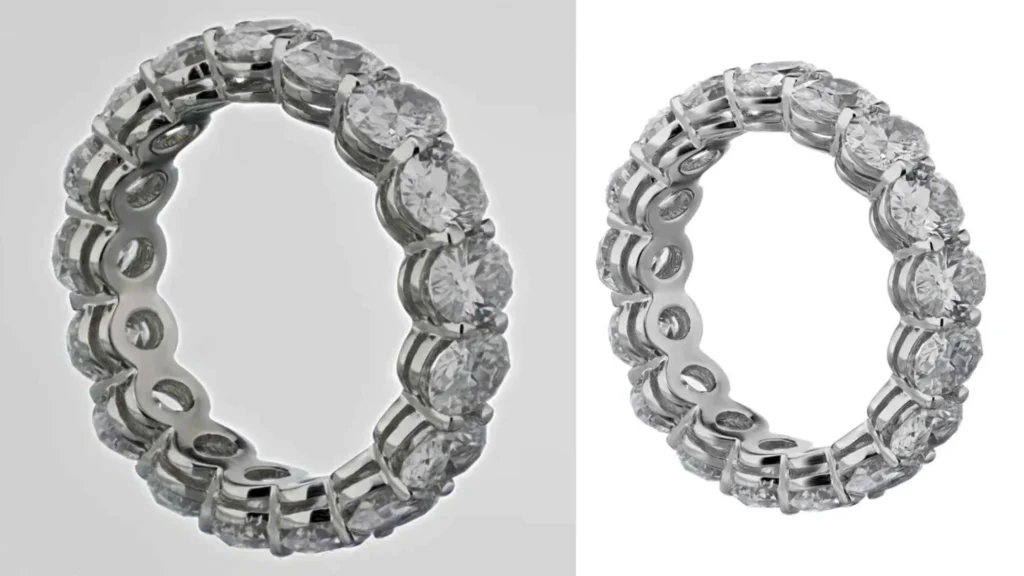
Why Presentation Matters as Much as Design
For an online jewelry business, how a collection is presented shapes buyer perception just as much as the designs themselves. A brand that uses sharp, consistent, professionally retouched images conveys a sense of quality and attention to detail even before a shopper reads a product description; inconsistent or poorly lit photos can erode confidence, even in authentic, strong designs. This is part of why retouching has shifted from a nice-to-have to something close to a baseline expectation for jewelers selling online.Why Jewelers Outsource This Work
Jewelry retouching requires specific technical skill, handling reflective metal surfaces, faceted stones, and fine detail work that differs meaningfully from general product photo editing. Outsourcing to a specialist jewelry retoucher gives jewelers access to that particular skill set without having to develop it internally, freeing up time to focus on design, inventory, and the parts of the business that most directly need a jeweler’s own attention.