Key Takeaways
- Pictures of furniture must effectively communicate scale, texture, and finish, since consumers cannot confirm those features themselves before they buy.
- The removal of background clutter and perspective correction impacts the perceived quality of the product completely independently from its actual quality.
- Accurate color is especially important for furniture items because the hues of wood and upholstery fabrics are among the most difficult to photograph faithfully.
- Catalog consistency is about more than individual products, because it impacts the collection as a whole.
Removing Distractions That Undercut Perceived Quality
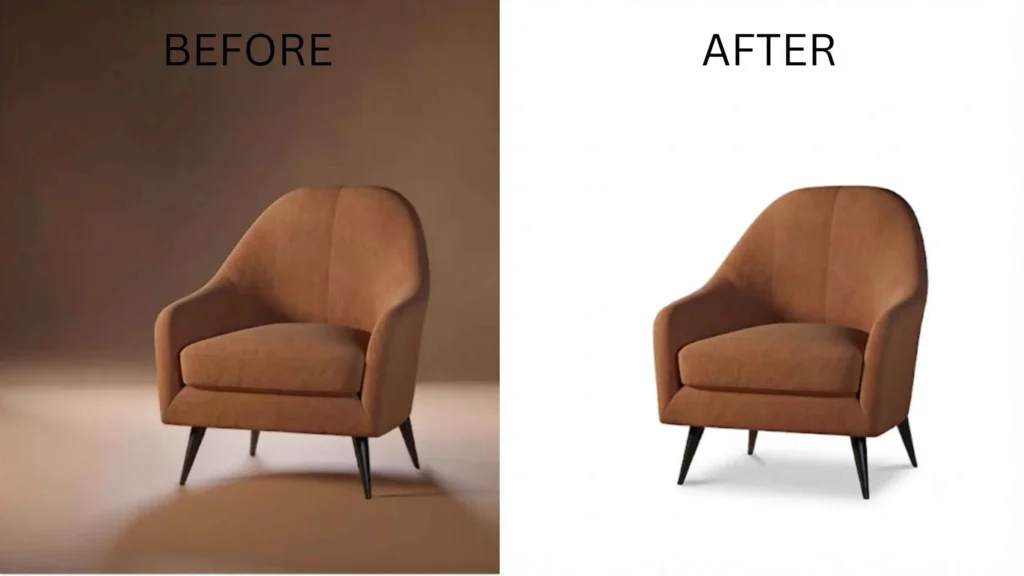
A stray cable, a cluttered background, an odd shadow — these details pull attention away from the furniture itself and can make even well-made pieces look less premium in photos. Background removal and replacement, along with careful cleanup of the surrounding frame, keep the piece as the clear focus, which matters more for furniture than for most product categories since buyers are already trying to imagine it in their own space.
Why Color and Material Accuracy Matters So Much
Wood tones, fabric colors, and finish sheens are genuinely difficult to photograph accurately; camera sensors and lighting conditions shift these colors more than people expect. For furniture specifically, this is a real risk: a buyer who receives a piece that doesn’t match its listing photo is far more likely to return it, and furniture returns are expensive given size and shipping costs. Careful color correction that maintains wood tones, upholstery colors, and overall finish directly reduces this risk.
Building Trust Through Consistent, Premium Presentation
Unlike smaller retail categories, buyers can’t touch or sit on furniture before purchasing online. The photos are doing all the work a showroom visit would normally do. Consistent, well-edited photography across a listing, and ideally across an entire catalog, signals a level of quality and professionalism that directly builds the confidence a buyer needs to commit to a larger purchase.What Furniture Photo Editing Typically Involves
Background removal and replacement to isolate the piece purely. Color correction to make sure the wood, fabrics, and finishes look true to color. Perspective correction because the furniture will be captured at an angle that can distort its proportions. And shadow work to ground the piece naturally rather than leaving it looking flat or artificially floating.