Key Takeaways
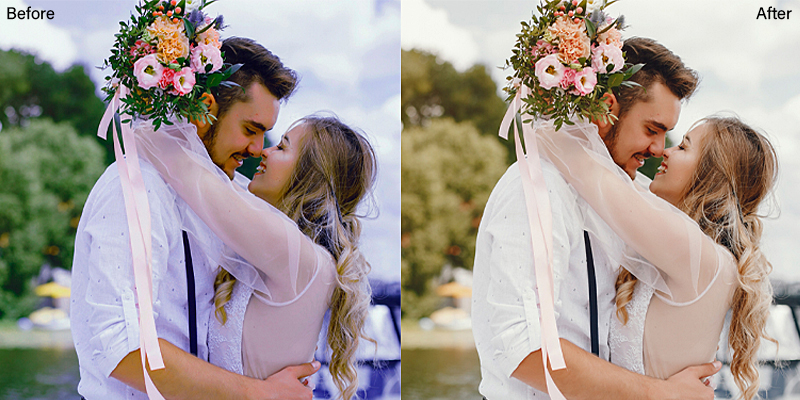
- Wedding editing covers color correction, retouching, and grading, each solving a different problem across a day shot in dramatically different lighting.
- Retouching should enhance natural beauty without erasing it; the goal is the best version of how someone actually looked, not a different version of them.
- Color grading adds emotional tone (warm and romantic, bright and modern, moody and cinematic) on top of technically accurate correction.
- The way photos are selected and sequenced into a final gallery matters as much as any individual image’s quality; it’s what turns a set of photos into an actual story.
From Raw Capture to Finished Memory
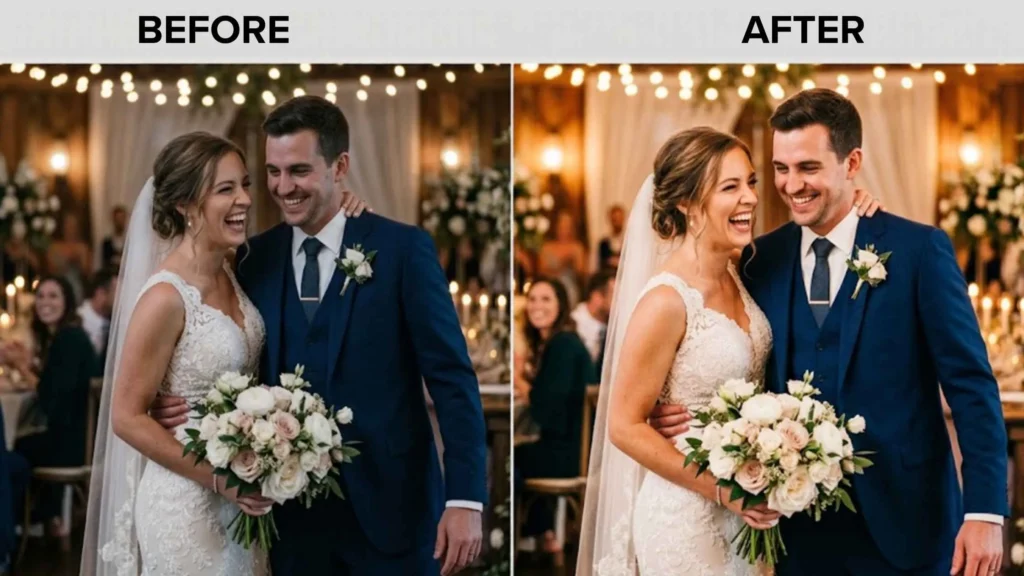
A camera captures a moment, but it doesn’t always capture it exactly as it felt. Editing bridges that gap, correcting exposure and color issues introduced by a day shot across wildly different lighting (outdoor ceremony, dim reception, harsh flash), while enhancing the emotional and visual quality of the images without changing what actually happened.Retouching: Enhancing Without Erasing
Portrait retouching for a bride and groom focuses on natural enhancement, evening skin tone, softening temporary blemishes, and correcting harsh shadows, while keeping both people looking genuinely like themselves. This balance matters more for wedding photos than almost any other category, since these are images a couple will look back on for the rest of their lives, and an over-retouched photo feels less authentic with every passing year, not more polished.
Preserving the Details That Carry Weight
Rings, floral arrangements, table settings, and small candid reactions from guests often carry disproportionate emotional weight in a wedding album. Editing that brings out genuine detail and clarity in these shots, sharpening a ring’s facets or a bouquet’s texture, adds real richness to a gallery beyond just the obvious hero shots of the ceremony and reception.