Key Takeaways
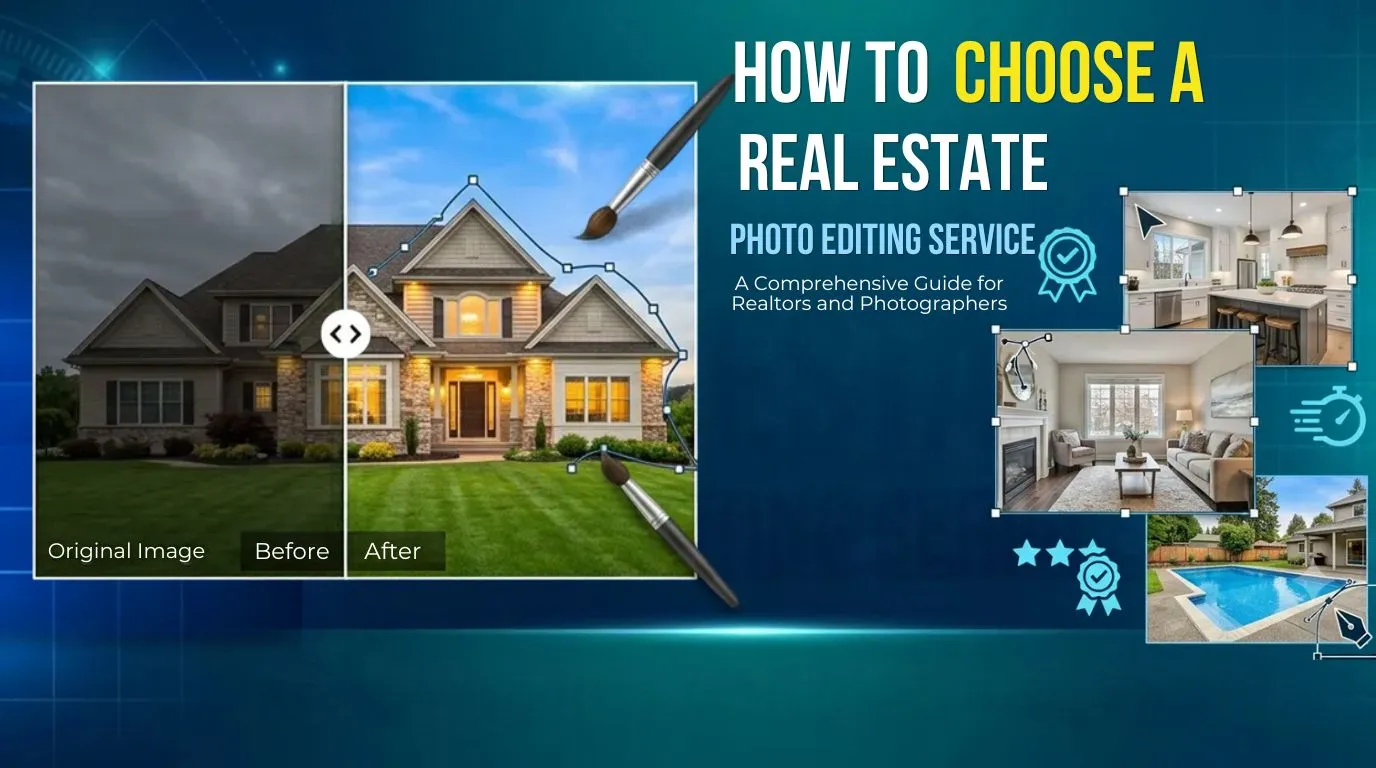
- HDR blending, color correction, perspective correction, and virtual staging are the core services most real estate photo editing providers offer; know which ones you actually need before comparing pricing.
- Turnaround time matters more in real estate than almost any other vertical; listings that sit unedited cost real money in market time.
- Ask for real before/after samples on interior shots specifically, since exterior and interior editing require different skills (window pull, perspective correction, virtual staging).
- Consistency across a listing’s full photo set (not just one hero shot) is what makes a gallery look professional.
What to Look For in a Real Estate Photo Editing Service
Reputation and real samples. Ask for actual before/after examples on interior real estate shots specifically, not just any product photography. Interior editing (window pull, perspective correction, virtual staging) is a distinct skill from general product or portrait editing.
Turnaround time. In real estate, speed has direct financial impact; a listing that sits unedited for days isn’t attracting buyers for now. Ask for a specific turnaround commitment (many services offer 24–48 hour standard turnaround) before committing to ongoing work.
Communication and revision process. Confirm how revisions work and how quickly a provider responds to feedback; this matters especially during a busy listing season when you’re sending batches frequently.
What Real Estate Photo Editing Actually Includes
HDR Blending
Interior real estate photography often combines multiple exposures (bright windows plus a darker interior) into one balanced, detailed image. This is the technique behind that classic “everything perfectly lit” real estate photo look.
Color Correction
Ensures a room’s true colors (wall paint, flooring, natural light) are checked accurately rather than skewed warm or cool by mixed indoor lighting.
Perspective Correction
Wide-angle lenses (standard for interior shots) introduce distortion; walls and doorways can lean or bow. Corrections ensure these lines match each other and the gaps look proportional to the real situation.
Virtual Staging
Involves placing furniture and other decorations in an empty property digitally and assisting customers in visualizing a property that is yet to be occupied. Virtual staging is typically far cheaper and faster than physical staging, which is why it’s become standard for vacant listings.
Why Realtors Outsource Real Estate Photo Editing
Time Savings
Editing takes real hours per listing. Outsourcing frees time for client-facing work; that is where a realtor’s time is saved, see our real estate photo editing services for what that looks like in practice.
Consistency Across Listings
Applying the same standards to edit each property in a real estate agent’s entire portfolio to stay looking tidy, polished, and professional.
Cost Efficiency at Scale
Investing in editing software and in-house training rarely makes sense for the volume most individual realtors or small teams handle. Outsourcing scales with actual listing volume instead, and comes with additional competitive benefits beyond raw cost savings.
What Real Estate Photo Editing Typically Costs
Pricing structures vary by provider, but most fall into a few common models: per-image pricing (a flat rate per photo, often with add-on charges for HDR blending or virtual staging), per-listing packages (a bundled rate covering a set number of photos for one property), and subscription plans (a monthly rate for agents or teams with consistent, ongoing listing volume). High Dynamic Range blending and conventional color correction usually fall at the bottom of the cost spectrum. Virtual staging, which requires extra effort, is more expensive per photograph. You should get an exact estimate for your specific situation based on the number of listings and combination of services needed, rather than just accepting some industry-wide price point.
Questions to Ask a Real Estate Photo Editing Service Provider
- How fast can you process orders, and are there any delays in peak seasons like spring?
- Can I see an entire before-and-after sequence of photographs for a listing like mine, and not just the hero image?
- Do you offer virtual staging, and if so, can I see examples on empty rooms specifically?
- What happens if I need a revision after the listing is already live?