Key Takeaways
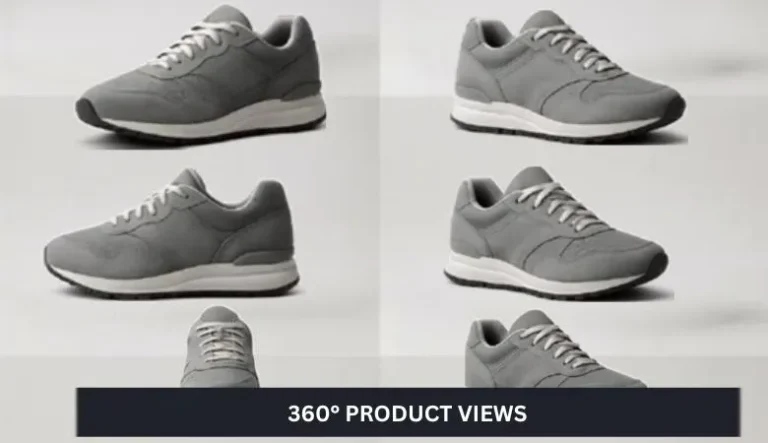
- Complete angle coverage (side, front, back, top, sole, close-up detail shots) matters more for footwear than most product categories, since shape and construction are central to the buying decision.
- Consistent framing, distance, and lighting across a full catalog signals professionalism and makes browsing easier for shoppers comparing styles.
- Lighting choice from natural vs. studio affects texture and color rendering differently, and the right choice depends on the shoe’s material and the brand’s aesthetic.
- Editing should preserve genuine material texture and true color rather than over-smoothing or oversaturating, since footwear return rates are sensitive to color and fit misrepresentation.
Shoppers can’t try on shoes before buying online, so footwear photography has to do the work a fitting room normally would: showing true color, material texture, construction detail, and how the shoe actually looks from every angle a buyer would want to check. Get this wrong, and even a genuinely great product underperforms online.
Cover Every Angle a Buyer Actually Wants to See
A complete footwear photo set typically includes a straight-on side shot, an angled side shot showing depth and shape, front and back views, a top-down view, and a sole shot, since buyers genuinely care about tread and construction. Close-up detail shots of stitching, laces, logo placement, and material texture round out the set, giving a shopper the same level of detail they’d get from handling the shoe in a store.Why Consistency Across a Catalog Matters
Shoppers notice inconsistent product photos; differences in zoom level, distance from camera, lighting, or angle between similar products make a catalog feel unpolished, even when individual shots are technically fine. Keeping distance, framing, and lighting setup consistent across an entire footwear line makes browsing easier for shoppers and signals a more professional, trustworthy brand.
Choosing Between Natural and Studio Lighting
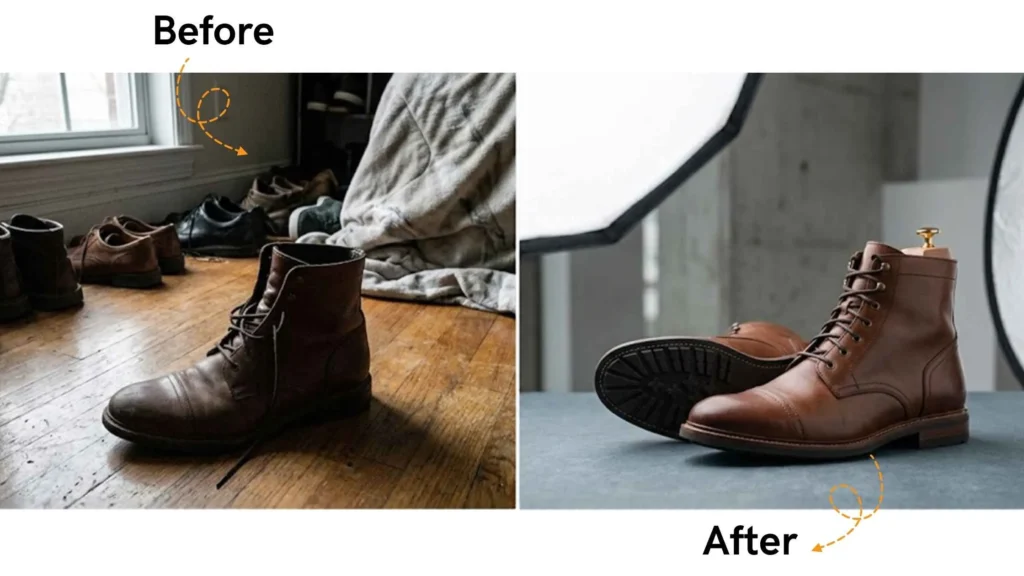
Natural light (particularly during golden hour) tends to produce warm, textured images well-suited to lifestyle-oriented footwear photography, but it’s limited by weather, time of day, and season, making it harder to maintain consistency across a large shoot. Studio lighting offers complete control over direction, intensity, and color temperature, which is important for maintaining strict consistency across a full product catalog. The right choice depends on the shoe’s material, the intended mood, and how much control you need over consistency at scale.What Editing Should (and Shouldn’t) Do
Editing for footwear should correct genuine technical issues, uneven lighting, an inconsistent background, and minor dust or scuffs introduced during the shoot, while preserving the shoe’s actual color and material texture. Over-smoothing texture or pushing color saturation beyond what the physical product actually looks like creates a real risk: footwear buyers who receive a shoe that looks different from its listing photo are more likely to return it, which is costly for a category with real shipping and restocking costs.Frequently Asked Questions
How many photos does a complete footwear product listing typically need?
A thorough set usually includes at minimum a straight side view, an angled side view, front, back, top, and sole shots, plus one or two close-up detail shots, enough to replace the information a buyer would get from handling the shoe in person.
Why does footwear photography need more angle coverage than typical products?
Shape, fit, and construction are central to how buyers evaluate footwear, and these details are hard to communicate in a single image, unlike simpler flat products that photograph adequately from one or two angles.
Should footwear photos be shot with natural or studio lighting?
This depends on the type of shoes and brand aesthetics. For instance, natural lighting works best for lifestyle-oriented shots, whereas studio lighting offers control and consistency, which is especially important when there are plenty of shoes to shoot.
What happens when you edit shoes too much?
Over-processed images that misrepresent true color or texture increase the likelihood that a buyer receives a product that looks different than expected, a common driver of returns in footwear given how much fit and appearance matter to the purchase decision.